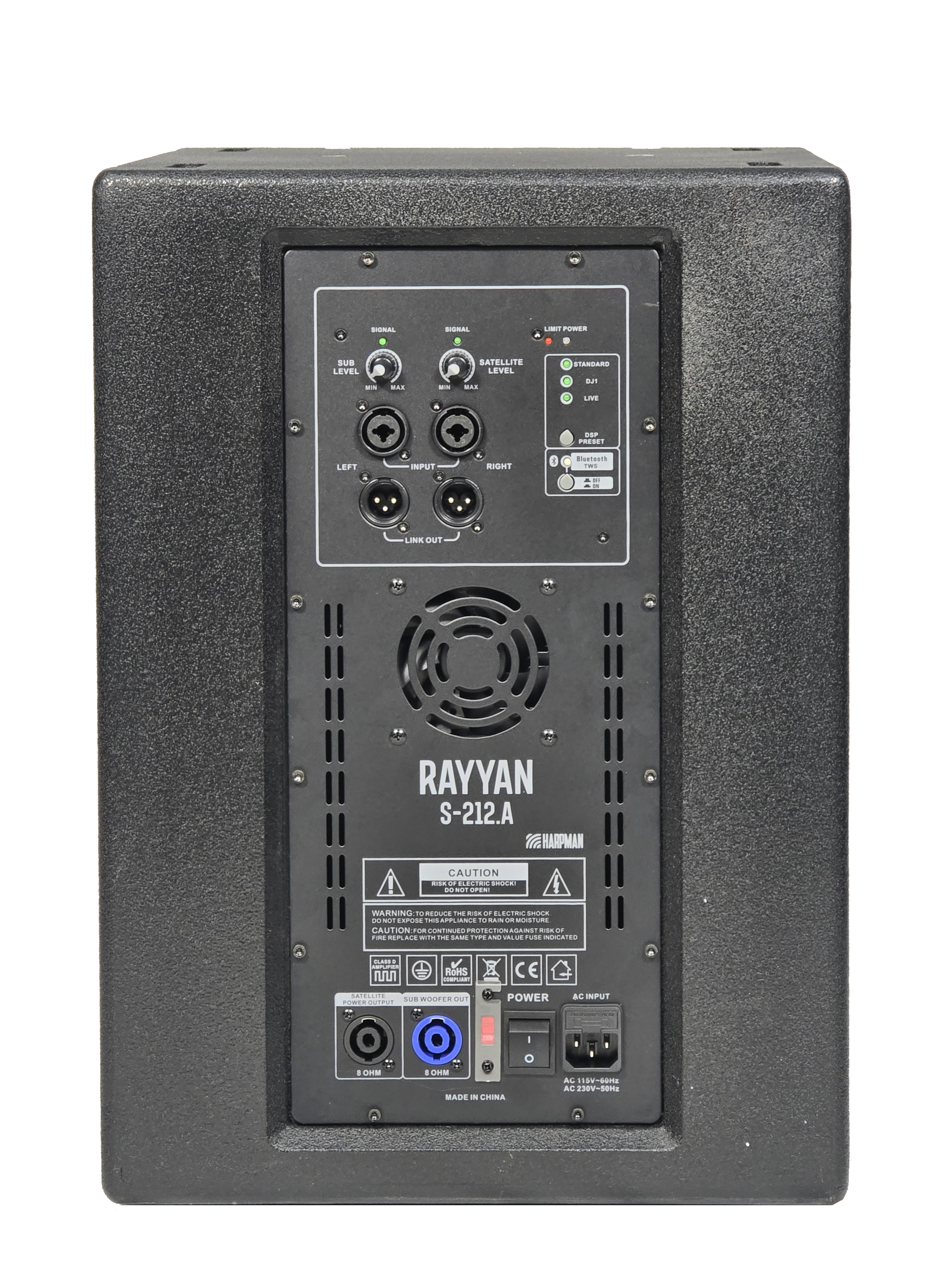

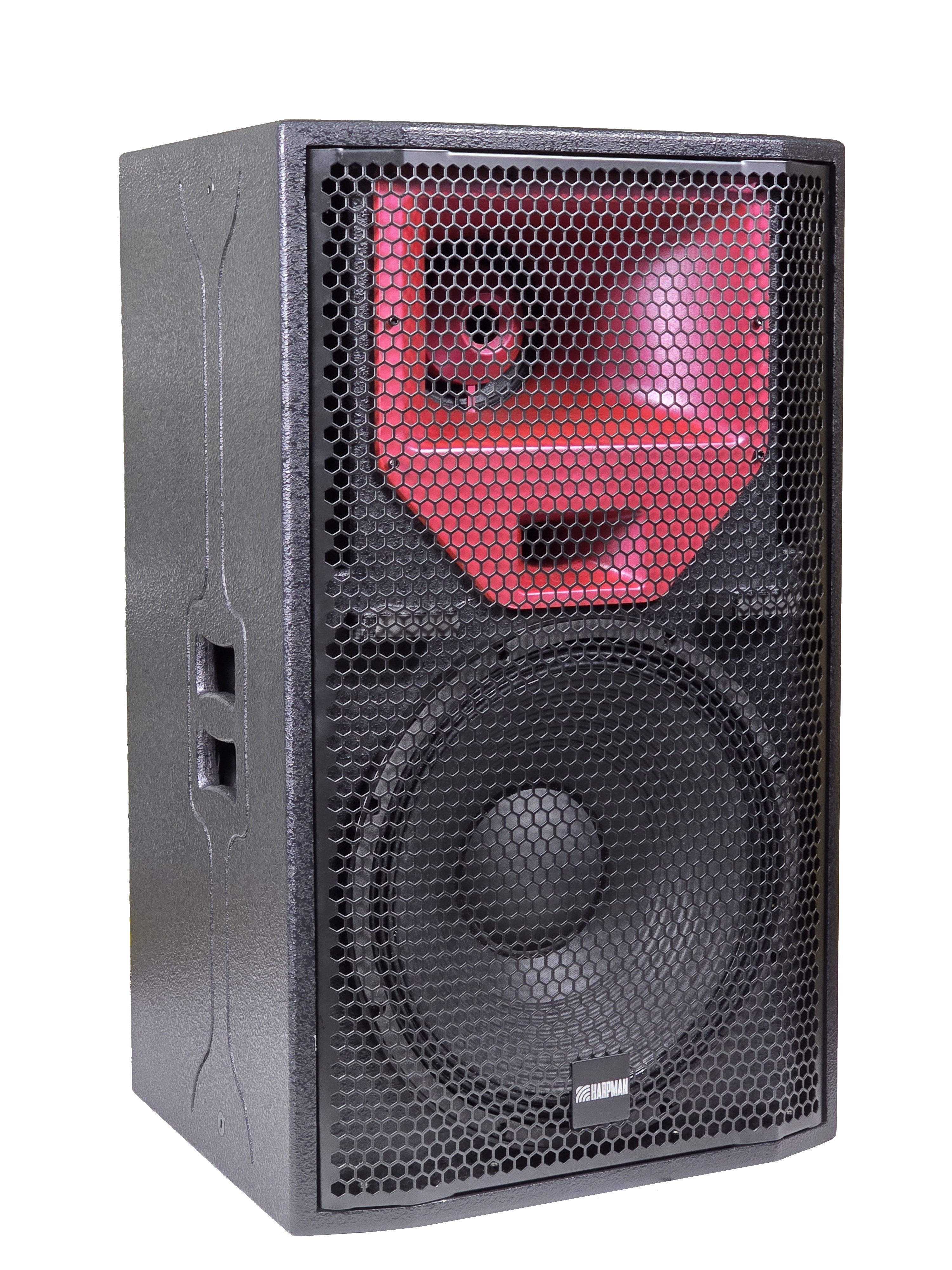
Active vs passive speakers** is one of the first choices you will face when buying speakers. Both are used in professional sound, and neither is always better. The right choice between active and passive speakers depends on your venue, how you will use the system and who will look after it.
What is a passive speaker?
A passive speaker has no built-in amplifier. It needs an external power amplifier to drive it. The signal chain looks like this:
Mixer → (Processor) → Power amplifier → Passive speaker
The amplifier and processor are usually kept together in a rack, away from the speakers, and long speaker cables run from the rack to the speakers.
What is an active (powered) speaker?
An active speaker has the amplifier built inside. Many also include a built-in crossover, protection circuits and sometimes DSP (digital processing) that has been matched to the speaker’s drivers. The signal chain is simpler:
Mixer → Active speaker
Active vs passive speakers: side-by-side comparison
Active (powered) | Passive
Setup Simple: plug in power and signal | More components and cabling
though each unit is heavier | but you carry the amp separately
Matching Amplifier already matched to the speaker | You must match the amp and speaker
Flexibility Less: the amp is fixed to the speaker | More: you can choose and upgrade
amp and speakers separately
Power supply Needs mains power at every speaker | Power is needed only at the
amplifier rack
Installation Harder for ceilings, high walls and | Suits fixed installs and many speakers
long distances
Maintenance If the amp fails, the whole speaker is | Amp and speaker can be repaired
out until repaired or replaced separately
Heat Heat is inside the speaker cabinet | Heat is in the amp rack, which can
be ventilated
When to choose active speakers
- You need a portable system for events, talks, roadshows or small performances
- You want a fast, simple setup with fewer things that can go wrong
- The venue is small and needs only a few speakers
- The people using it are not audio technicians
- Speakers will be placed where power sockets are easy to reach
When to choose passive speakers
- You are doing a fixed installation in a restaurant, hall, school or place of worship
- You need many speakers (for example ceiling speakers) driven from a central rack
- The speakers are mounted high up or in places where providing mains power would be difficult
- You want to keep all the electronics in one ventilated, lockable rack for easy maintenance
- You want flexibility to upgrade or replace the amplifier separately in the future
Common myths about active vs passive speakers
“Active speakers always sound better.”
“Passive speakers are old-fashioned.”
Not at all. Passive speakers are widely used in installed systems because they are flexible and easy to maintain.
“Active speakers are more expensive.”
The speaker itself costs more because it includes the amplifier, but you do not need to buy a separate amp. Compare the total cost of the complete system, including cables and rack, not just the speaker price.
Things to consider in Malaysia
Quick decision guide
- Portable events or mobile use? Choose active.
- Small venue, non-technical users? Active is usually simplest.
- Restaurant, hall or school with many speakers? Passive with a central amplifier rack is common.
- Not sure? Describe your venue to a supplier, who can recommend the best option.
Frequently asked questions
Is the active vs passive speakers question the same as Bluetooth vs wired?
Can I mix active and passive speakers in the same system?
Do passive speakers need a separate processor?
Can I connect a passive speaker directly to a mixer?
Which is better for karaoke?
Get the right speakers for your venue
Tell us about your space and how you plan to use it. The Harpman Malaysia team will recommend speakers and matching equipment, and give you a free quote.
WhatsApp us
Request a quote
Explore our product range
Related reading:
[What Is a PA System? A Beginner’s Guide]